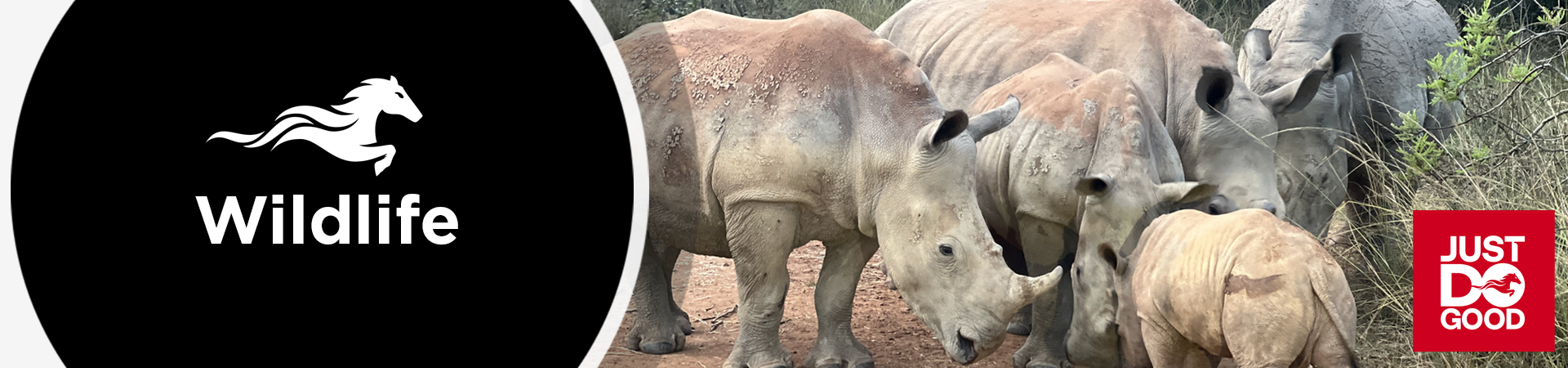
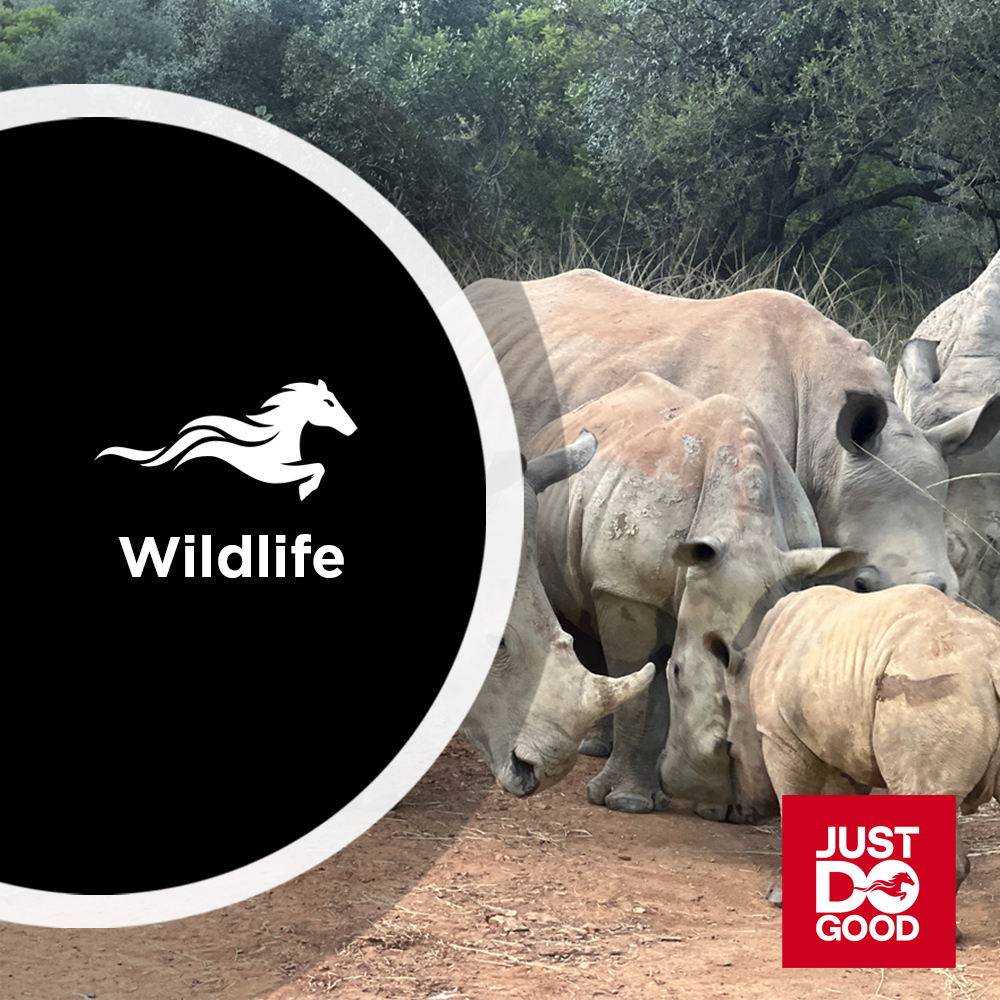
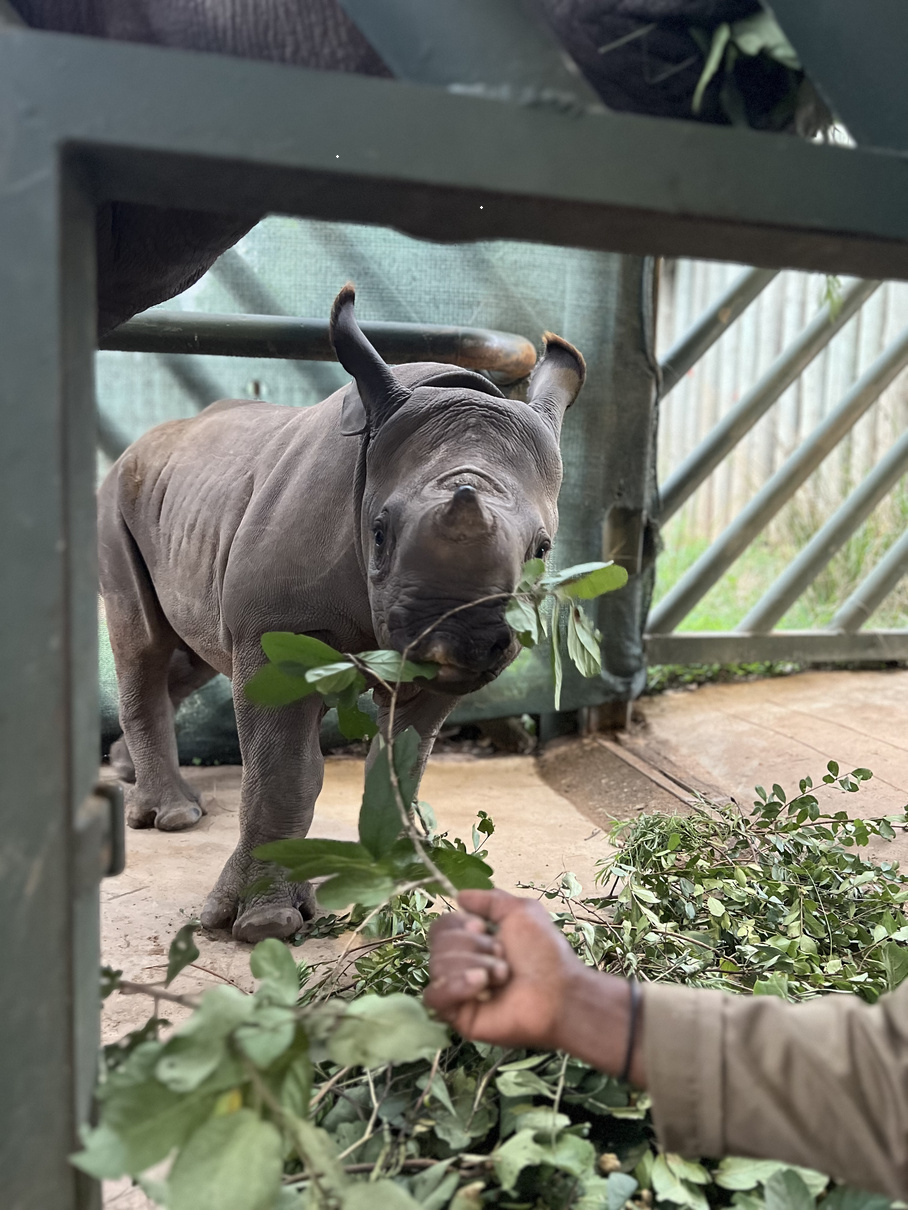
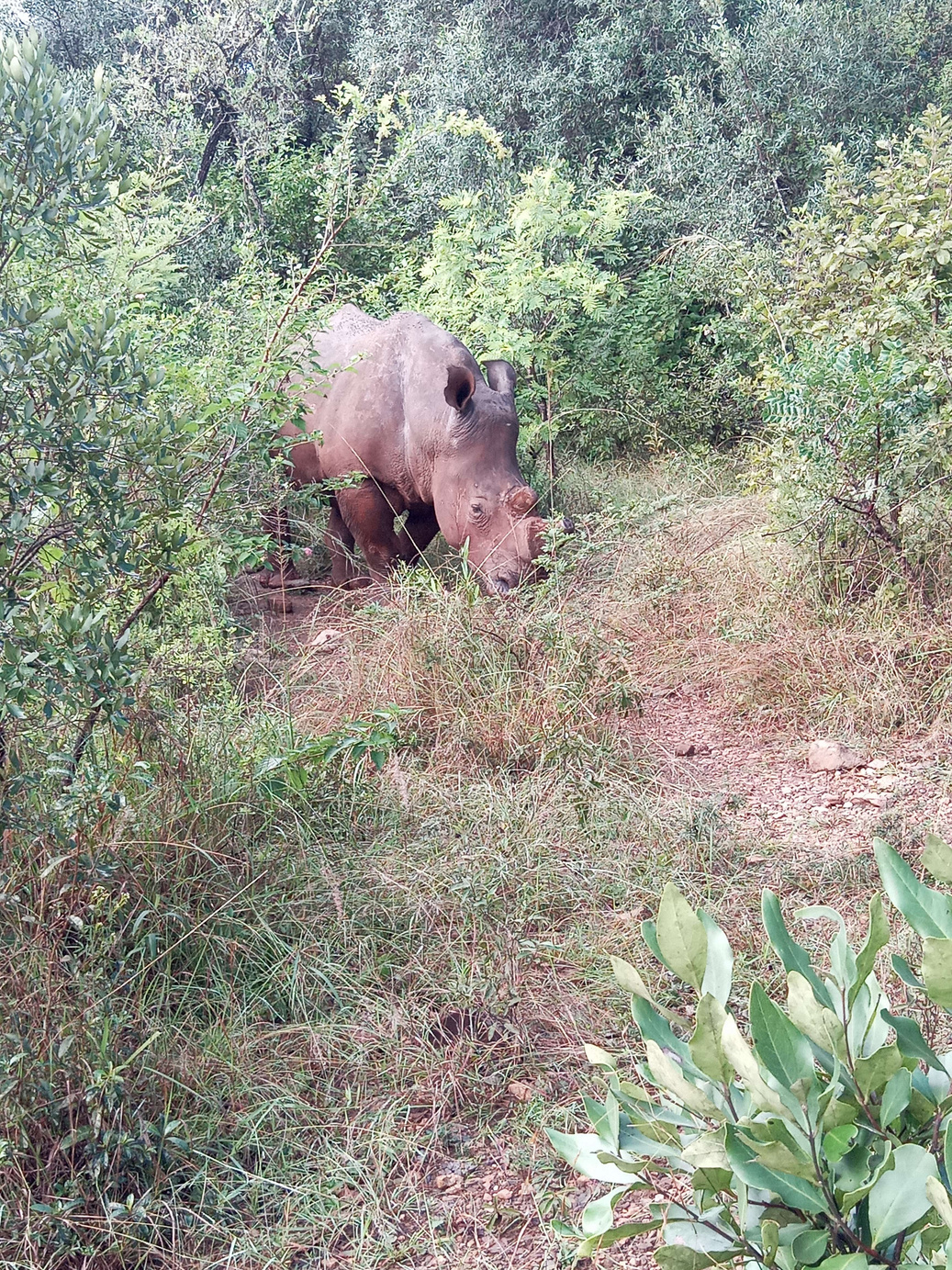
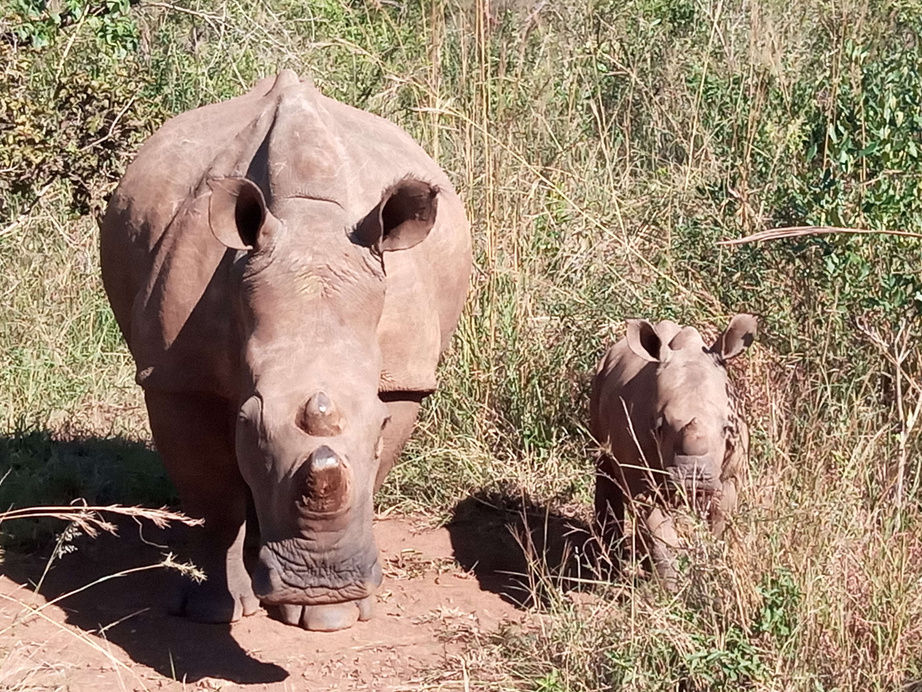
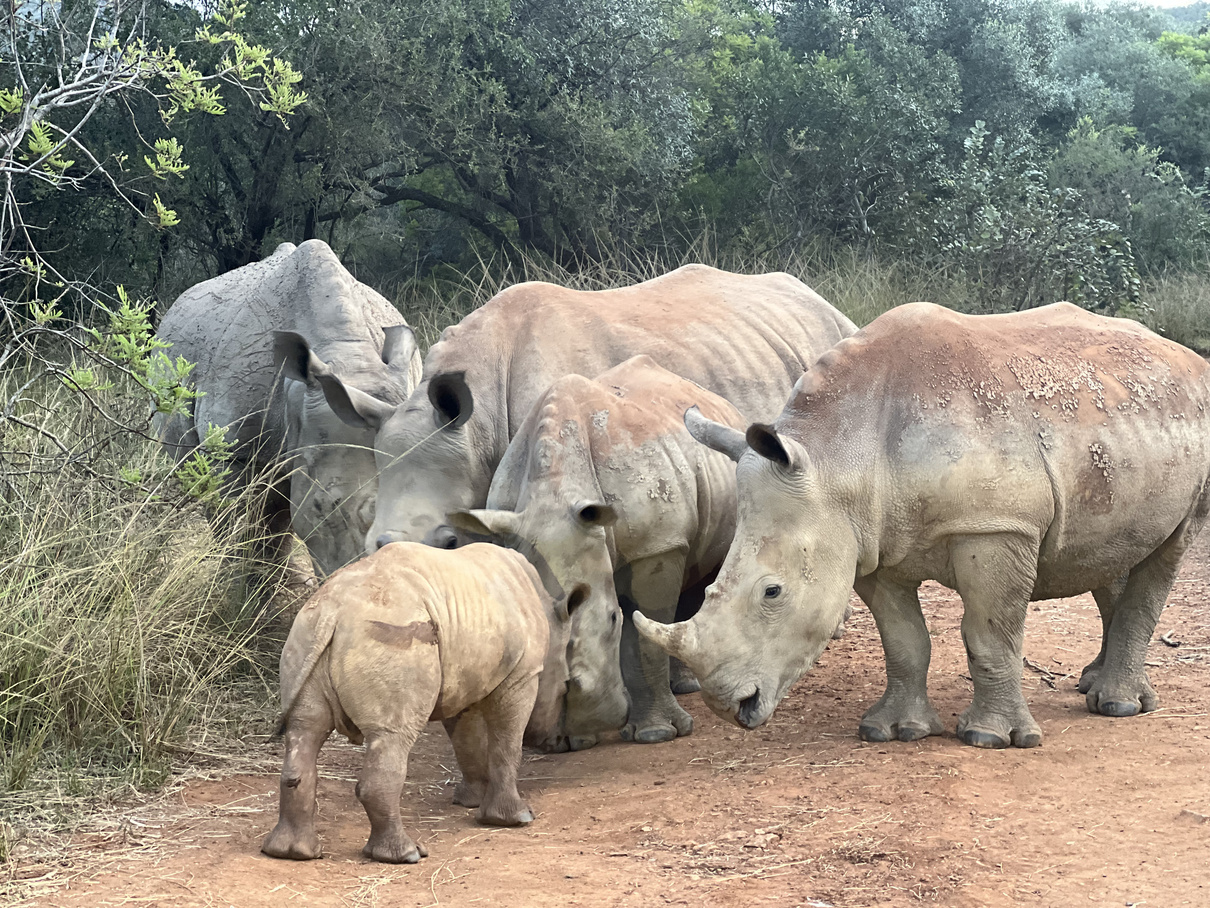
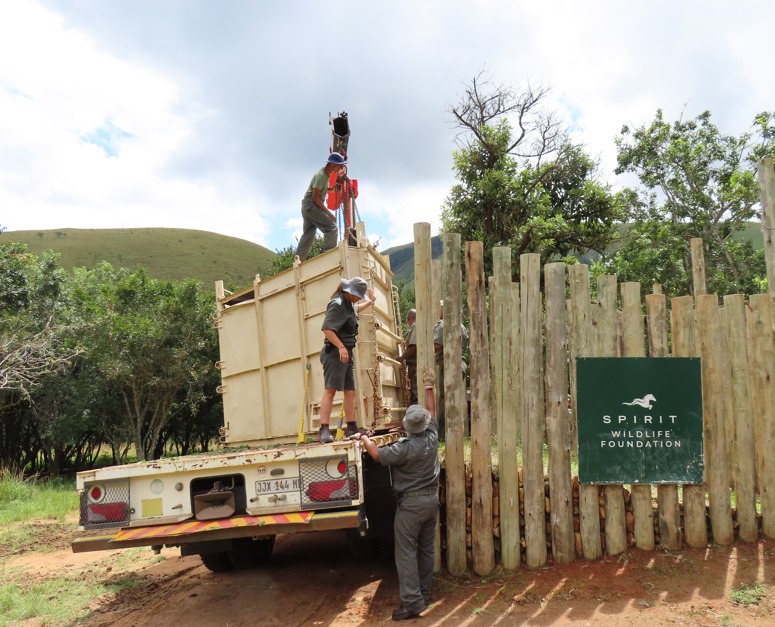
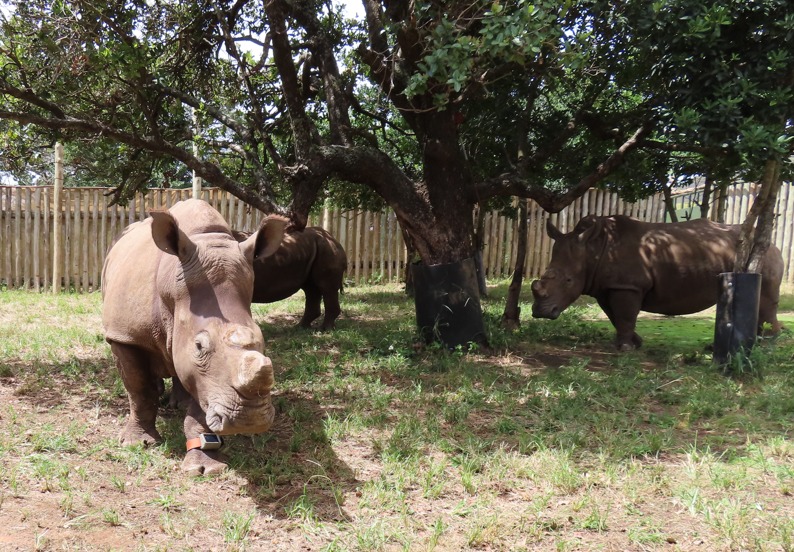
Meanwhile, across the country, another noteworthy conservation achievement unfolded. Three white rhino cows arrived safely at Mountainlands, becoming the first rhinos originating from Care for Wild Rhino Sanctuary to be established on the reserve. While the move may have appeared simple from the outside, it represented an extraordinary conservation effort involving dedication, collaboration and careful planning.
Their arrival at Mountainlands marks a landmark achievement for both the rhinos and the reserve. The successful translocation strengthens both conservation efforts and genetic diversity, while demonstrating the value of creating secure landscapes for endangered species.
The second quarter of the year also brought exciting developments through our partnership with Wildlife Vets.
One of the standout achievements was the successful relocation of two female African wild dogs to a protected reserve. With fewer than 7,000 African wild dogs remaining in the wild, carefully managed translocations play a vital role in strengthening genetic diversity, supporting healthy pack structures and securing populations across protected landscapes. Their successful move contributes directly to the long-term survival of one of Africa’s most endangered predators.
At the same time, an orphaned male cheetah took a major step towards independence as he was relocated to a reserve where he will begin learning to hunt and survive in a natural environment. Another rehabilitated cheetah is advancing through the next stage of her rehabilitation and will soon enter a semi-wild environment as she moves closer to becoming self-sufficient.
Preparations have also continued for an ambitious cheetah reintroduction programme in Zambia. Multiple cheetah are being assembled for the first release group destined for the Luangwa Valley, where they will contribute to efforts aimed at restoring predator populations and strengthening ecosystem health.
Progress was also made on the construction of a specialised vulture boma and supporting infrastructure. While vultures often receive less attention than some of Africa’s larger species, their role in maintaining healthy ecosystems is irreplaceable. Supporting their protection helps strengthen the broader ecosystems upon which countless other species depend.
At Care for Wild, winter brings different experiences depending on a rhino’s age. For Spirit, Grey, Lilli and Jemu, this is familiar territory. They know the pattern of cold nights followed by crisp sunny mornings and understand how to move, feed and rest through the season. For Luke and Jemu’s calf, however, this will be their first.
Grey continues to quietly be Grey. Never one for drama, he moves through the changing season with calm confidence, avoiding unnecessary conflict and occasionally drifting toward the younger rhinos and mothers.
Wyntir continues to recover steadily from her horn injury. It is healing well and gradually closing. Rainbow, however, remains entirely unconcerned with such serious matters and is as mischievous as ever, taking on her mother’s role of seeking out vehicles to rub her horn against! One particularly special moment this month saw several of the calves together at once, Rainbow, Sage and others gathered while playing with Tornado, currently the youngest and smallest of the calves. Completely fearless, Tornado seems determined to prove his size means nothing. Like his father Storm, he already carries himself as though he is ready to take on the world!
Modjadji remains as cheeky as ever. With increased building and development activity around the camp and bomas, she has found endless opportunities to insert herself where she absolutely should not be! Open gates are invitations, buckets are playthings to knock over, and the rhinos continue to be excellent participants in her daily entertainment.